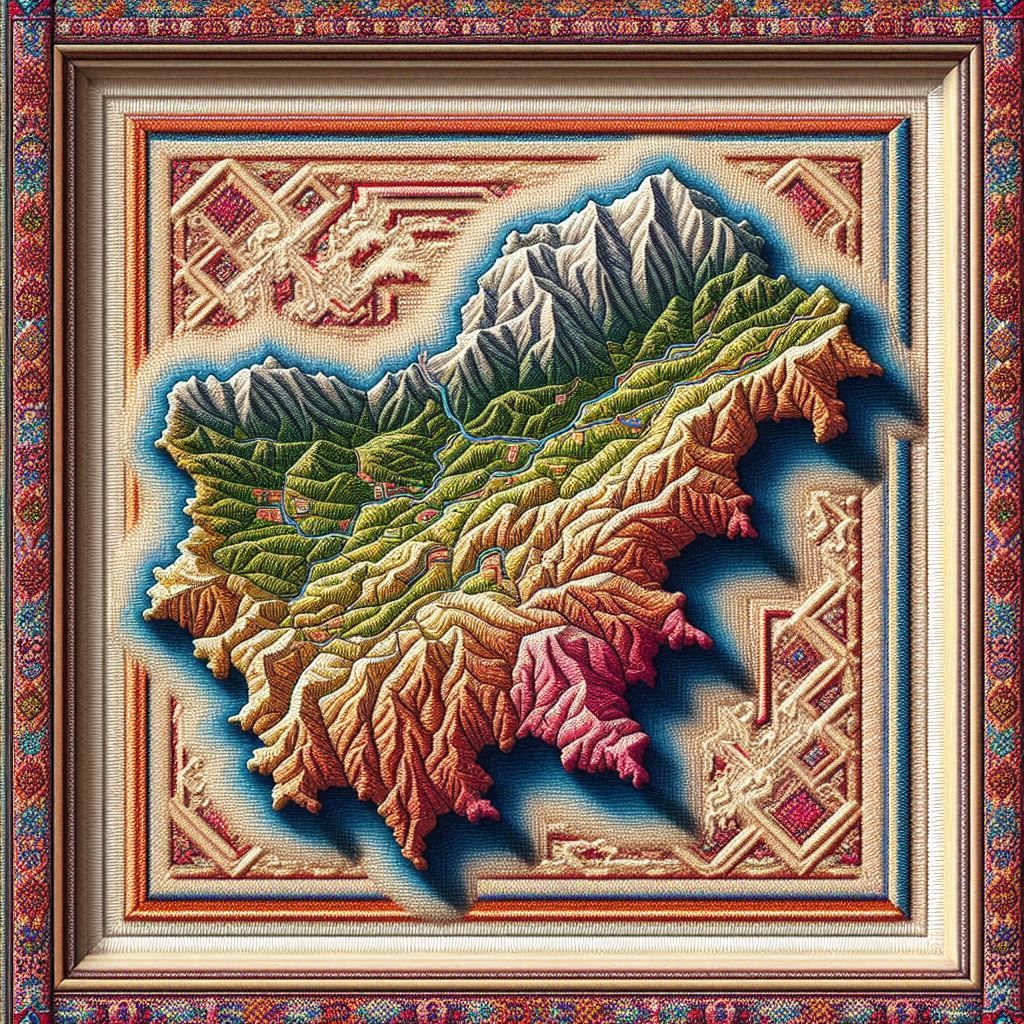
Slovene political integrations
722 – 1848 · early medieval to pre-March Revolution
⚔️ 722 AD
Carantania: first organised Slavic principality
Around 722, the Alpine Slavs (ancestors of modern Slovenes) formed the principality of Carantania — one of the oldest Slavic state formations in Europe. It secured political autonomy under Prince Valhun (or Borut’s predecessor) and resisted Avar and Frankish pressure. Carantania preserved unique inauguration rituals of the “Duke’s Stone” (Knežji kamen), symbolising early Slavic parliamentary tradition.
🛡️ 745 AD
Carantania under Bavarian / Frankish protectorate
Facing Avar danger, Carantania accepted Bavarian overlordship (745), later integrated into the Carolingian Empire. Though losing full sovereignty, Slavic nobles retained local governance and legal customs. This dual structure became a model of “indirect integration” — Slovene identity survived within larger realms.
🏰 843–976 AD
March of Carantania & Holy Roman framework
After Treaty of Verdun (843), Slovene lands fell to East Francia. The March of Carantania (later Duchy of Carinthia from 976) formed a distinct political entity. Slovenes participated in imperial structures while keeping local assemblies and land rights — an early form of regional autonomy.
📜 12th–14th centuries
Habsburg & feudal integration: Carniola, Styria, Carinthia
From 1335, most Slovene-inhabited counties fell under Habsburg dominion. Yet the nobility and provincial estates (deželni stanovi) maintained Slavic legal traditions. The Duchy of Carniola received particular privileges. Political integration remained provincial, but Slovenes developed common identity across these Inner Austrian lands.
🌾 1515–1572
Peasant revolts & the first common “All-Slovene” demands
The 1515 Slovene Peasant Revolt and the Croatian–Slovene rebellion of 1573 (under Matija Gubec) transcended provincial borders. Demands for unified legal rights across Carniola, Styria, Carinthia signalled a nascent political integration of Slovene commoners — a forerunner to later national programs.
✍️ 1550–1584
Protestant movement & first Slovene books (Trubar, Dalmatin)
Primož Trubar published the first books in Slovene (1550). The Reformation created a standardised literary language, unifying Slovenes spiritually and culturally across fragmented political borders. While not a state, this linguistic-political integration laid foundations for later collective action.
👑 1620–1790
Centralisation under Habsburg absolutism
Maria Theresa and Joseph II introduced administrative reforms (districts, unified judiciary). The Kingdom of Illyria (1809–1813, Napoleonic) briefly united Slovene lands, acting as a political blueprint. After 1815, the Austrian Empire reasserted control, but the Illyrian Provinces inspired Slovene elites toward territorial cohesion.
🇸🇮 1848 AD
Spring of Nations & “Zedinjena Slovenija” (United Slovenia)
During the March Revolution, Slovene national activists (Matija Majar, Lovro Toman) demanded the unification of all Slovene-inhabited counties (Carniola, southern Styria, Carinthian Slovene regions, Austrian Littoral) into a single autonomous political unit — Zedinjena Slovenija. This was the first explicit modern political integration program of Slovenes, advocating linguistic equality and representation. Though rejected by the Frankfurt Parliament, 1848 marks the endpoint of medieval/early modern integrations and the birth of Slovenian political nationalism.
⚡ 1848 concludes our timeline — from Carantania’s duchy to the demand for a unified Slovene political territory.
📌 Political integration of Slovenes (722–1848): From the early medieval Principality of Carantania (722), through autonomous marches within the Frankish and Holy Roman Empire, to Habsburg provincial estates — Slovenes maintained distinct legal and assembly traditions. The Illyrian Provinces (1809–1813) offered a momentary territorial union, while the revolutionary year 1848 crystallised the demand for “United Slovenia”, closing our period with a clear vision of national political unity.